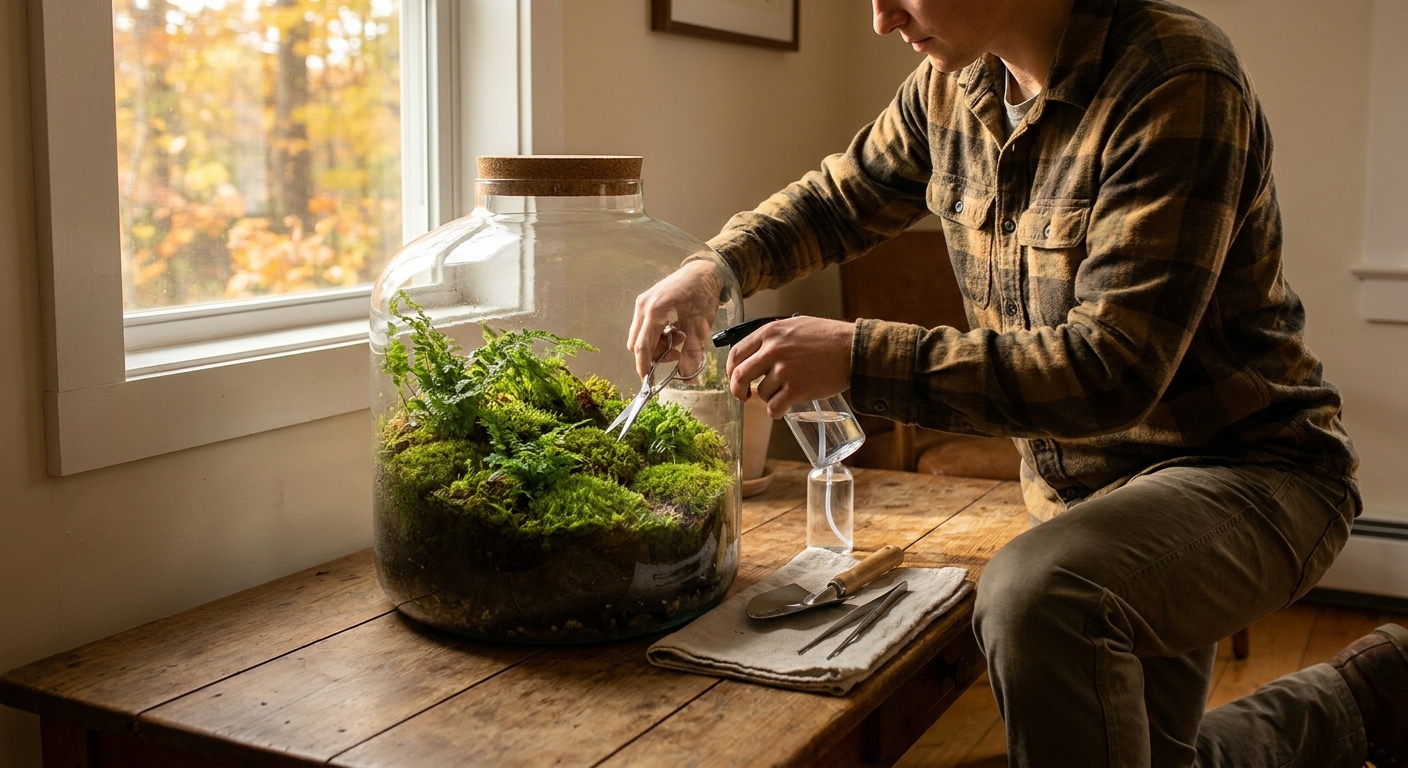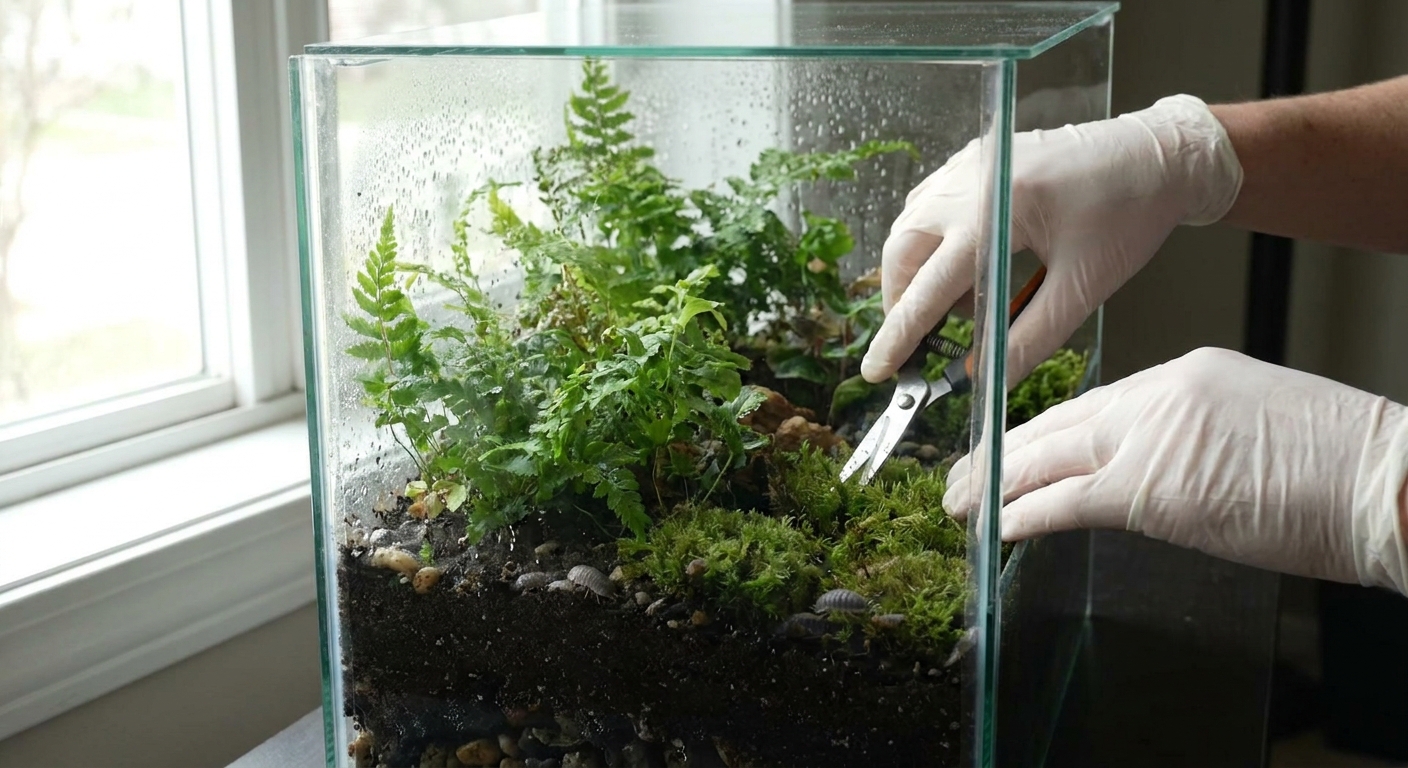
A freshly built terrarium or vivarium is thrilling—emerald moss, dewy glass, roots settling into new soil. But the real artistry emerges months later, when the ecosystem has matured under your steady hand. Good maintenance doesn’t freeze a setup in time; it guides it, the way a gardener guides a hedgerow or a bonsai.
Why Maintenance Makes the Magic Last
This blueprint walks you step-by-step through practical, bioactive-friendly maintenance: choosing plants and mosses that age well, managing layers and drainage, nurturing cleanup crews, balancing humidity and light, and planning long-term care.
1. Build for Easy Maintenance: Plant and Moss Strategy
If you want low-stress upkeep, start with a calm cast of characters.
Stable, Forgiving Plants
Choose species that tolerate trim, shade, and the occasional missed misting:
- Compact foliage plants:
- Cryptanthus (earth stars) for terrestrial rosettes that stay low.
- Miniature Syngonium varieties for variegated interest.
- Anubias and Bucephalandra (in high-humidity vivaria or paludaria) attached to wood or rock.
- Textural understory plants:
- Selaginella kraussiana and related spike mosses for ground cover.
- Small Ficus or Pilea species to fill gaps between rocks.
Focus on slow to moderate growers; rapid vines turn maintenance into constant hacking rather than thoughtful pruning.
Mosses as Living Mulch
Moss is not just decorative—it’s a living mulch and moisture meter.
- For constantly humid, nearly closed systems:
- Taxiphyllum barbieri (Java moss) grown emersed along water features.
- Fine-tufted forest mosses that thrive in still, moist air.
- For vivaria with more airflow:
- Cushion moss (Leucobryum spp.) that tolerates brief drying.
- Sheet moss (Hypnum spp.) that rebounds quickly after misting.
Use moss to soften edges between hardscape and soil, blanket steep slopes, and hide plastic or foam. Everywhere moss grows well, evaporation slows and wet/dry swings are gentler—making your maintenance lighter.
2. Layering and Drainage: The Quiet Engine of Low Effort Care
A well-layered base turns daily care into subtle adjustments instead of emergency rescues.
Ideal Layer Stack for a Bioactive Setup
From bottom to top:
- Drainage layer: 2–5 cm of LECA, lava rock, or pumice. This catches excess water and stores it away from roots.
- Barrier: Mesh or fiberglass screen to keep soil from filling the drainage zone.
- Bioactive soil blend: A loose, airy mix. One effective recipe:
- 30–40% organic soil or coco coir (sieved, no added fertilizers)
- 30% fine orchid bark or shredded leaf litter
- 20% pumice or perlite
- 10% charcoal or biochar
- Leaf litter + moss: A top layer that buffers moisture and feeds microorganisms.
Maintenance Checks for Layers
Every couple of months:
- Look for water pooling at the bottom. A thin, clear layer is fine. Cloudy, foul-smelling water means the lower zones are anoxic.
- Watch for substrate slump—if the soil appears compacted and sunken, roots may be starved of air.
Light maintenance actions:
- Siphon with a turkey baster if drainage water rises into the soil layer.
- Poke a few small ventilation holes in the lid or increase venting time to encourage evaporation if your tank stays sodden.
A well‑aired substrate decomposes waste efficiently and rarely smells like anything other than a walk in the woods.
3. The Bioactive Workforce: Setup and Upkeep of Cleanup Crews
A bioactive system offloads much of your routine cleaning to tiny invertebrates.
Selecting Your Cleanup Crew
- Springtails (temperate or tropical varieties):
- Specialize in mold and fungal film.
- Essential in closed or semi-closed terrariums.
- Isopods:
- Dwarf white isopods (Trichorhina tomentosa): Stay small, perfect for compact terraria.
- Porcellionides pruinosus (powder blue/orange): Great for larger vivaria, very active decomposers.
Optional, case-dependent:
- Woodlice-like larger isopods (Armadillidium spp.) for bigger enclosures.
- Detritivore snails in moist, well-ventilated tanks (monitor for boom cycles).
Maintaining a Healthy Crew
Monthly bioactive check-in:
- Lift leaf litter gently: You should spot movement—tiny white springtails, pearly isopods.
- Top up leaf litter if you can see bare soil across large areas.
- Offer a micro-feast: A pinch of fish food, shrimp pellet, or bit of wilted vegetable, placed on a leaf. Remove leftovers after 24–48 hours.
Watch for imbalance:
- No visible springtails? Add a fresh culture. - Too many isopods nibbling tender new growth? Reduce feeding and occasionally rehome a portion.
When balanced, your cleanup crew quietly clears shed skins, old roots, and fallen leaves long before you notice them.
4. Humidity Management: The Art of Damp, Not Dripping
Humidity maintenance begins with watching surfaces.
Reading the Enclosure
- Glass:
- Fine, mist-like condensation that comes and goes with the light cycle indicates a healthy loop.
- Heavy droplets running down constantly suggest too little airflow.
- Plants:
- Fern fronds crisping at the tips: air is too dry or moving too fast.
- Transparent, mushy foliage: humidity plus overwatering equals rot.
Simple Humidity Maintenance Habits
- Closed terrariums:
- Open the lid fully for 10–20 minutes once a week to swap the air.
- If you see constant fogginess, leave the lid slightly ajar for a few days and reduce misting.
- Vivaria with vents or screens:
- Mist in the morning, letting leaves dry gradually throughout the day.
- Use taller hardscape and dense planting to create humid pockets near the substrate and more ventilated zones higher up.
Keep a mental picture of your target: moss beaded with tiny droplets in the morning, then simply glossy green by midday.
5. Lighting: Guiding Growth Instead of Fighting It
Light is your steering wheel. Get it right, and maintenance is mostly editing, not crisis management.
Choosing and Maintaining Your Light
- Use full-spectrum LED bars or strips rated for plant growth.
- Aim for 8–12 hours of light per day, consistent via a timer.
Every 2–3 months:
- Wipe dust from the light casing and any glass lids beneath.
- Observe plant shapes:
- Leggy stems and small, pale leaves = increase intensity or duration slightly.
- Compact, deeply colored leaves but crispy edges on moss = intensity is high; raise the fixture or shorten the photoperiod.
Shaping with Shade
Hardscape and plant placement can reduce maintenance:
- Place light-hungry plants directly under the brightest zone.
- Nestle shade lovers and mosses beneath wood and overhangs.
This micro-zoning reduces the urge of low-light plants to stretch, and you’ll trim less frequently.
6. Routine Hands-On Care: What to Do and How Often
Weekly: The Gentle Touch
- Check glass: Wipe algae or mineral spots with a soft microfiber cloth or algae scraper.
- Pinch away decay: Remove any yellowed or mushy leaves with your fingers or small scissors.
- Quick mist or water: Add moisture only if the top of the substrate feels dry and moss looks dulled rather than glossy.
Monthly: The Deeper Tidy
- Prune thoughtfully:
- Shorten runners and vines before they mat over everything.
- Cut above leaf nodes to encourage bushiness.
- Thin moss:
- Lift or trim moss that’s climbing stems or smothering tiny rosettes.
- Replant fragments in bare spots—free ground cover.
- Substrate inspection:
- Insert a wooden skewer; if it comes up soggy and foul-smelling, plan a partial substrate refresh.
Yearly (or as Needed): Renewal
- Partial substrate replacement:
- Scoop out 30–50% of the soil, especially the most compacted regions.
- Rebuild the profile with fresh, airy mix.
- Layout edit:
- Remove overgrown hardscape or reorient it to open sightlines.
- Divide and replant mature clumps, keeping the most vigorous, well-rooted sections.
Think of this as a controlled forest disturbance: old growth makes space for new seedlings, and your ecosystem regains vigor.
7. Troubleshooting Common Maintenance Challenges
Persistent Mold on Wood or Moss
- Confirm springtails are present and active; if not, seed more.
- Increase air exchange by opening vents longer or enlarging small holes.
- Avoid over-misting; aim the nozzle at hardscape and leaf litter rather than directly at vulnerable foliage.
Light, white fuzz is common in young systems and often resolves itself as bioactivity builds.
Algae Explosion on Glass
- Shorten the photoperiod by 1–2 hours.
- Scrape gently, then siphon any floating debris.
- Add more fast-growing plants to compete for nutrients in water-heavy systems.
Pale, Slow Moss
- Check for too much light—moss often does better in bright shade than in direct beam.
- Ensure there is consistent surface moisture; mist lightly and regularly instead of occasional deluges.
8. Developing Your Maintenance Rhythm
Every enclosure has its personality: a paludarium with a waterfall breathes differently from a sealed mossarium. Use this blueprint as a starting point, then adjust based on what you see, smell, and feel:
- If the glass stays clear but moss is yellowing, think more humidity or gentler light.
- If leaves are lush but soil smells sour, think better drainage and airflow.
- If cleanup crews vanish, think more leaf litter, fewer chemicals, less disturbance.
Over time, maintenance shifts from a checklist to a dialogue. You’ll know when a plant is about to bolt into a hardscape joint, when moss wants a trim, when the glass wants a wipe, often before it’s visually obvious.
Care for your terrarium or vivarium the way you’d care for a favorite trail in the woods: remove what doesn’t belong, repair what’s eroding, and then step back and let the forest—no matter how small—do what it does best.
With a stable substrate, well-chosen plants and mosses, a thriving bioactive crew, and gentle but regular attention, your quiet forest behind glass can run for years with just a few thoughtful minutes each week.