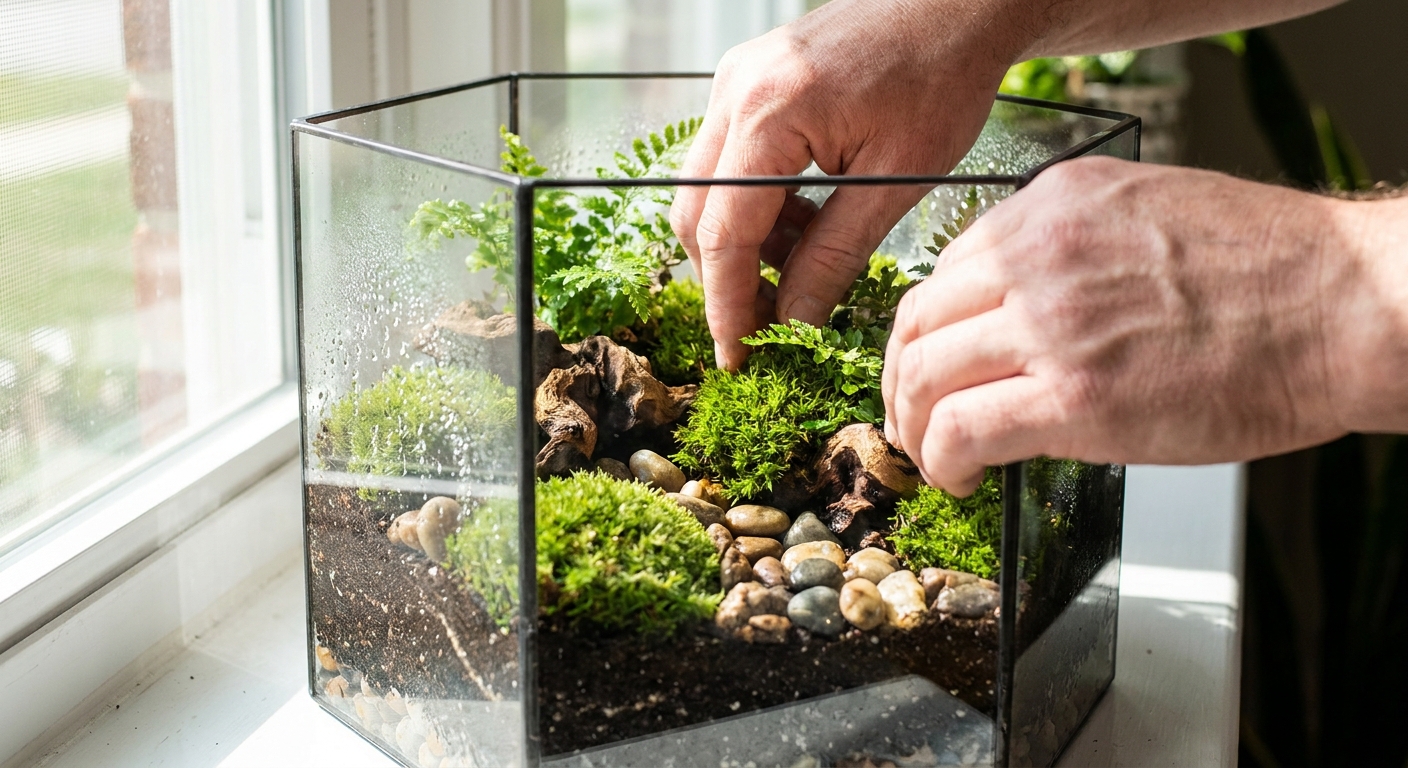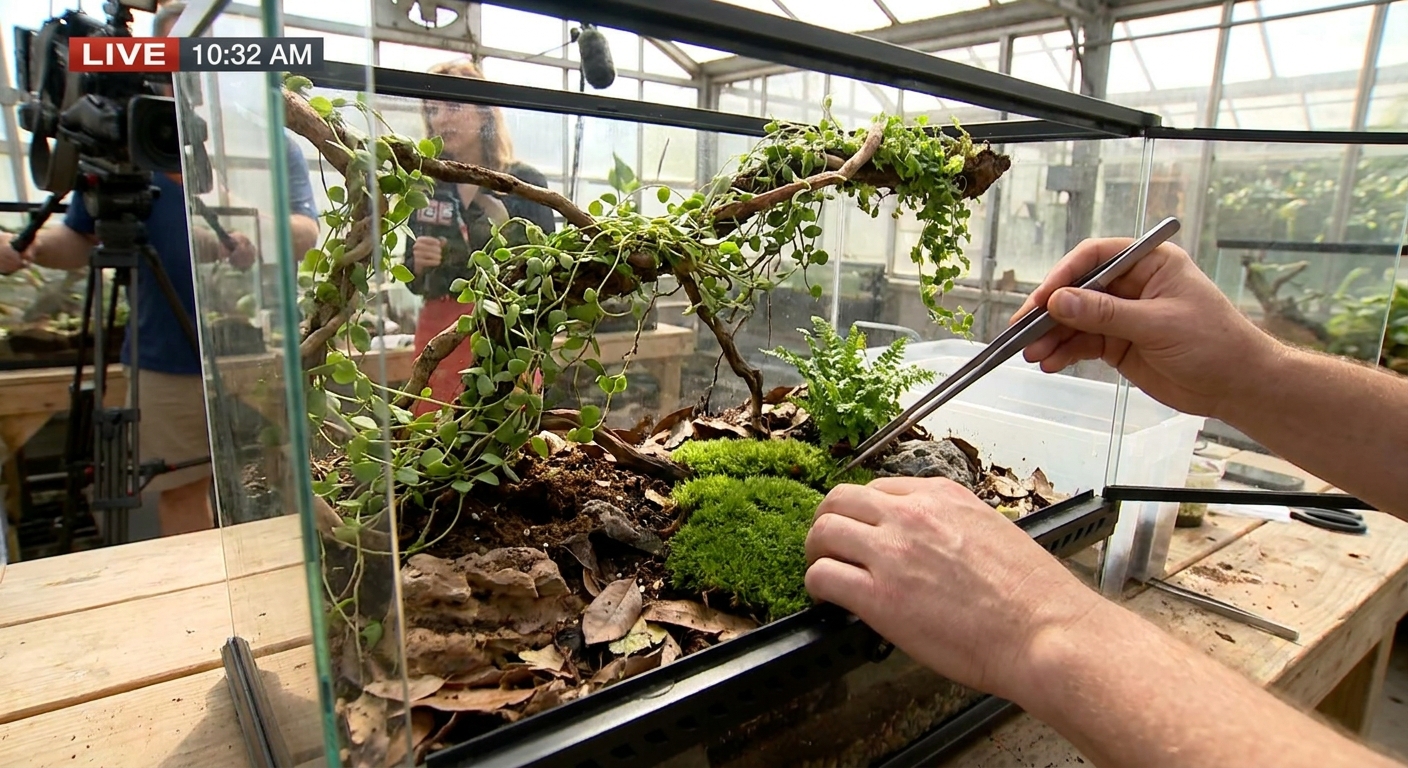
In a vivarium, glass is just the shell. The true habitat is woven by roots, rhizoids, and leaf litter—the living tapestry of plants and moss under your care. Their placement, health, and interaction with microfauna dictate whether your setup becomes a self‑tuning ecosystem or a high‑maintenance display.
Why Plants and Moss Matter More Than the Glass Box
This field manual walks you step‑by‑step through selecting plants and moss, constructing layers and drainage, establishing a bioactive foundation, configuring humidity and light, and maintaining long‑term balance—aimed squarely at terrarium and vivarium enthusiasts.
Step 1: Clarify Your Vivarium Type and Conditions
Before you buy your first plant, define your environment:
- Enclosure style: tall vs. wide, closed lid vs. screen top
- Inhabitants (if any): dart frogs, geckos, inverts, or plants only
- Room factors: ambient temperature, natural light, and how often you’re home to tend it
Your plant and moss list should follow these constraints, not fight them.
Common Vivarium Archetypes
Cool, Humid Plant Terrarium (Closed Glass, No Animals)
- Best for: mosses, miniature ferns, tropical groundcovers. - Target: 18–24°C, 80–100% humidity.
Tropical Rainforest Vivarium (Ventilated, With Animals)
- Best for: bromeliads, vines, epiphytes, robust mosses. - Target: 22–27°C, 60–90% humidity depending on level.
Paludarium (Land–Water Hybrid)
- Best for: emergent stems, riparian mosses, marginal plants. - Target: moisture gradient from saturated banks to airy upper branches.
Hold this mental blueprint as you choose your plant palette.
Step 2: Choosing Plants for Function First, Beauty Second
Think like a habitat designer. Every plant should serve at least one of these roles:
- Shelter: hides and cover for animals
- Stabilization: roots that hold banks, slopes, and backgrounds
- Microclimate: leaves that intercept mist, shade moss, and condense water
Recommended Workhorse Plants
For the Background and Canopy
- Philodendron micans / small climbing Philodendron
Velvet leaves, well‑behaved vines that root onto cork or foam backgrounds.
- Scindapsus pictus (small‑leaf forms)
Slow to moderate growth, silver variegation brightens shady corners.
- Marcgravia species (for advanced builds)
Shingling vines that hug backgrounds and create layered foliage.
For the Midground
- Anthurium clarinervium (juveniles) or small hybrid Anthuriums
Bold, heart‑shaped leaves as focal points in larger vivaria.
- Smaller ferns like Microgramma lycopodioides, Davallia spp.
Textured fronds that respond dramatically to light shifts.
- Begonia species adapted to high humidity (e.g., cane or rhizomatous dwarfs)
Provide speckled color and interesting leaf shapes; require consistent moisture and air movement.
For the Foreground and Edges
- Selaginella kraussiana and relatives
Moss‑like, luminous foliage that loves constantly moist substrate.
- Tiny Peperomia (e.g., P. rubella, P. rotundifolia)
Mound and spill over rocks and wood.
- Cryptocoryne species (in paludaria)
Rooted in saturated banks with leaves reaching into humid air.
Avoid heavy feeders and plants that want intense light or dry air (e.g., snake plants, succulents)—they will sulk in vivarium conditions.
Step 3: Selecting Moss: Building the Green Infrastructure
Mosses provide:
- A soft carpet that protects soil from splash erosion
- Micro‑reservoirs that slow water movement
- Refuge and grazing surfaces for cleanup crews
Moss Selection by Use Case
Carpet and Pathways
- Tropical Sheet Moss (commercial blends)
Spreads across horizontal surfaces; easy to trim.
- *Fern Moss (Thuidium delicatulum)
Feathery, fern‑like look. Prefers cooler setups; excels in plant‑only terraria.
Vertical and Background Mossing
- Weeping Moss (Vesicularia ferriei)
Can cling to rough textures when kept consistently damp.
- Java Moss (Taxiphyllum barbieri) on wet walls or near waterfalls.
- Cushion Moss (Leucobryum)
Accent Cushions & Mounds
Use as isolated islands or to hide hardware.
- Miniature mood moss (various species)
Sculptural mounds tucked between stones.
Ensure any moss labeled for aquarium use is tolerant of emersed (out‑of‑water) humidity if used above the waterline.
Preparing Moss for Planting
- Rinse under cool, dechlorinated water to remove debris.
- Gently squeeze excess moisture—aim for damp, not dripping.
- Break into naturalistic fragments; avoid hard, straight edges.
Step 4: Constructing Layers and Drainage Like a Soil Engineer
A good vivarium never asks plants to sit in their own bathwater.
Base Drainage Layer
- Depth: 3–8 cm depending on enclosure height.
- Materials: rinsed LECA, lava rock, or a mix.
- Optional: add a length of airline tubing down one corner before adding substrate for future water extraction via siphon.
Barrier Layer
Lay terrarium mesh or fiberglass screen over drainage, trimming to the walls. Check that no substrate can slip through; this layer is your filter.
Bioactive Substrate Layer
A robust all‑purpose mix for tropical vivaria:
- 40% coco fiber (or sieved topsoil without fertilizers)
- 30% fine orchid bark/leaf litter mix
- 15% pumice or perlite
- 10% charcoal
- 5% sand or fine gravel for structure
Moisten until the mix holds shape when squeezed but does not ooze water. Slope the land:
- Higher in the back for depth
- A subtle bank toward one side if you plan a water feature
Leaf Litter Layer
Cover exposed substrate with 1–3 layers of baked, pesticide‑free leaves. This serves as:
- Food and shelter for isopods and springtails
- A buffer that prevents compaction
- A visual forest‑floor texture
Step 5: Planting and Mossing—Hands in the Soil
Now comes the tactile part.
- Place hardscape first (wood, rock, backgrounds). Anchor major pieces firmly, testing with gentle pressure.
Plant from back to front:
- Background climbers and larger plants in the rear - Mid‑height fillers around hardscape bases - Foreground creepers last, using tweezers for precision 3. Tuck roots well below the substrate surface; firm soil gently to remove air pockets.
Apply moss:
- Press carpet moss onto gently compressed, moist substrate. - Wrap moss around branch bases and rock ledges. - Use cotton thread or thin fishing line to hold vertical moss in place until it roots.
Mist thoroughly to settle everything, then allow the enclosure to rest for 1–2 days before introducing animals or a heavy spray schedule.
Step 6: Adding the Bioactive Cleanup Crew
Once plants are stable and the substrate is evenly moist, introduce decomposers.
Springtails
- Seed directly into substrate and on leaf litter.
- For small terraria, a few scoops from a culture are sufficient; they will multiply to match food supply.
Isopods
- Bury small pieces of cork bark or decomposing wood as isopod shelters.
- Start with a modest colony (10–30 individuals depending on enclosure size).
- Provide a calcium source (cuttlefish bone or crushed eggshell) and protein snacks (flakes, fish food, or specialized isopod diets) every 1–2 weeks.
Watch over the first month: if leaf litter is vanishing too quickly, you’ve added too many isopods for the system size; add more litter and reduce feeding.
Step 7: Managing Humidity and Lighting as Daily Rituals
Humidity Tuning
- Use a small digital hygrometer at plant level.
- Observe how long surfaces stay wet after misting.
If glass stays heavily fogged for more than 4–6 hours:
- Increase ventilation (crack the lid, add a vent strip, or aim a small fan across the top—not directly inside).
- Reduce misting volume.
If moss edges crisp and leaves curl:
- Increase mist frequency, not necessarily the amount each time.
- Add additional leaf litter and moss to slow evaporation.
Lighting Strategy
- Choose an LED with a broad spectrum (5000–6500K, CRI 80+).
- Start with 8 hours per day.
- After 2 weeks, adjust by 30–60 minutes based on growth:
- Stretched, pale plants: +30–60 min.
- Algae on glass and hardscape: reduce intensity or duration.
Mount lights so that heat does not bake the lid—if it’s uncomfortably hot to touch, raise the fixture or improve airflow.
Step 8: Long‑Term Care: A Maintenance Checklist
Terrarium and vivarium care is subtle. Use this recurring checklist.
Weekly
- Inspect leaves for yellowing, spots, or melt.
- Trim back overzealous vines and groundcovers.
- Spot‑clean glass where condensation lines have left mineral marks.
- Gently stir any compacted substrate edges with a skewer.
Biweekly
- Replenish leaf litter where it has broken down.
- Feed isopods and check springtail activity in shaded, moist corners.
- Examine moss closely: is it vibrant and springy, or dull and mushy? Adjust moisture accordingly.
Monthly
- Thin moss carpets if they are climbing over slower plants.
- Check drainage layer water level—siphon off excess if it approaches the substrate barrier.
- Evaluate lighting: compare current growth with photos from setup time.
Seasonally (Every 3–6 Months)
- Remove and replace any rotting wood that is structurally failing.
- Gently lift and adjust plants that have been overtaken by neighbors.
- Consider introducing new genetic diversity: a different moss patch, a fresh fern division, or an additional cleanup crew culture.
Reading the Signals of a Healthy Glass Ecosystem
A well‑balanced bioactive vivarium with thriving plants and moss has a look and feel you can learn to recognize:
- Visual: new leaf flushes, moss with upright, hydrated tips, no large areas of bare substrate.
- Olfactory: clean, forest‑floor scent; no sour or rotten odor.
- Behavioral:* inhabitants using plants for perches, hides, and egg sites; isopods visible but not swarming every surface.
When something shifts—a sudden algae bloom, widespread leaf drop, or moss decline—treat it as a question your system is asking. Recheck water levels, airflow, light, and recent changes. Adjust in small, incremental steps.
Closing Thoughts: Becoming a Habitat Technician
Working with plants and moss in terraria and vivaria is part art, part science, and part patient observation. You’re not arranging plastic scenery; you’re curating the slow choreography of roots, rhizoids, fungi, and microfauna.
With deliberate plant and moss selection, sound layering and drainage, an active cleanup crew, and tuned humidity and lighting, your vivarium becomes a living instrument. Over months and years you’ll learn its rhythms—when to prune, when to mist, when to simply watch the moss breathe against the glass.