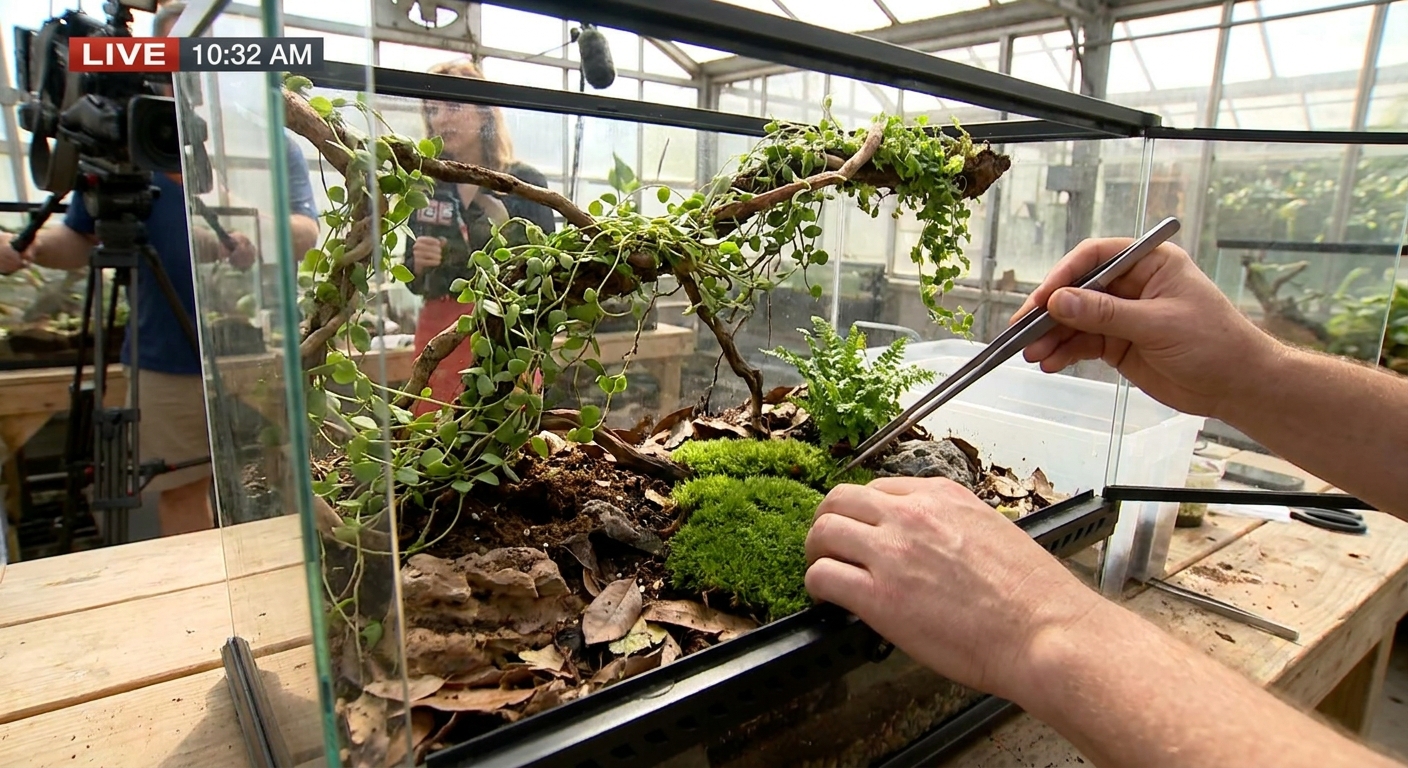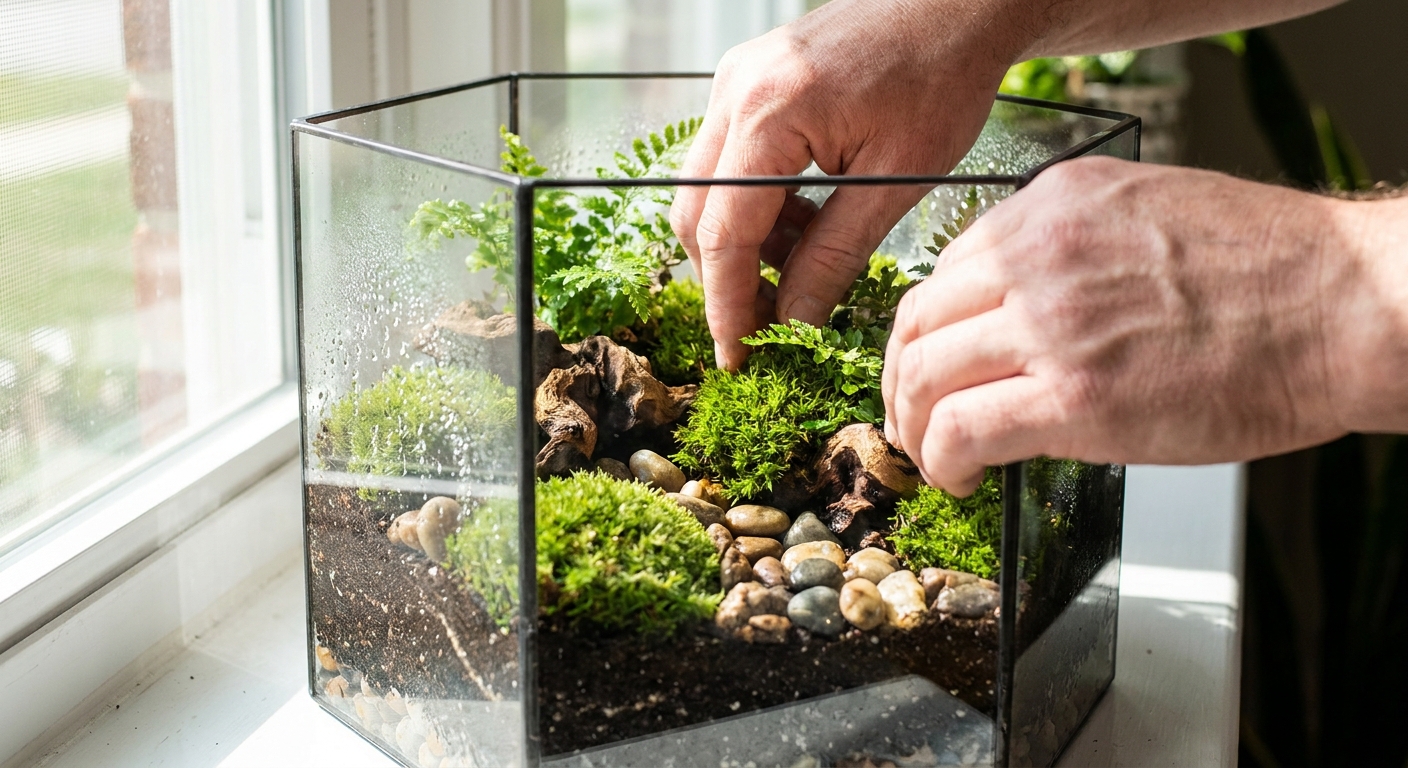
Open a well‑balanced terrarium and the air that escapes is different—cooler, earth‑scented, faintly sweet with chlorophyll. Mosses bead with moisture, tiny leaves catch the light, and the substrate smells like a forest after rain. This is the promise of a thoughtfully planted, bioactive glass ecosystem.
Introduction: A Forest You Can Hold in Your Hands
This guide walks through plant and moss selection, layering and drainage, bioactive cleanup crews, humidity and lighting, and the long‑term care that keeps your miniature forest thriving.
Choosing Plants: Architecture, Texture, and Growth Habit
Think of your terrarium as a three‑dimensional composition. Choose plants for height, texture, and pacing of growth, not just their looks in a nursery pot.
1. Canopy Plants (Vertical Structure)
These give your terrarium a sense of scale and depth:
- Fittonia (Nerve Plant) – Ideal for high humidity, low light. Paper‑thin leaves with bold veins; great for foreground "shrubbery" in medium builds.
- Peperomia species (e.g., P. caperata, P. prostrata) – Compact rosettes or trailing forms; thick leaves tolerate occasional drying.
- Selaginella (Spikemoss) – Feathery, primitive foliage that forms lush mini‑thickets. Needs consistently moist substrate.
Keep canopy plants modest: in a closed terrarium, "tall" usually means 10–20 cm.
2. Groundcovers and Edgers
These plants stitch the scene together at soil level:
- *Pilea depressa / Pilea glauca – Small bead‑like leaves on creeping stems, good for rocks and foreground.
- Creeping fig (Ficus pumila) – Fast and vigorous; best in larger, ventilated vivaria where you can prune aggressively.
- Small ferns (e.g., Lepisorus, tiny Asplenium spp.) – Delicate fronds that unfurl like miniature forest ferns.
Use groundcovers sparingly at first—they spread faster than you expect in high humidity.
3. Accent Plants
These add color, form, or surprise:
- Miniature orchids (e.g., Pleurothallis, Lepanthes for advanced keepers) – Prefer mounted setups and steady high humidity.
- Cryptanthus (Earth Stars) – Rosette bromeliads that provide bronze, pink, and striping, best in open or lightly ventilated tanks.
- Utricularia sandersonii (bladderwort) – A carnivorous groundcover with tiny "bunny ear" flowers in very damp setups.
Select accents that fit the microclimate you can reliably provide, not just what looks striking on day one.
Moss: The Living Skin of the Terrarium
Moss is more than decoration—it’s a moisture reservoir, erosion control, and microfauna habitat.
1. Types of Moss for Glass Ecosystems
- Cushion Moss (Leucobryum glaucum)
Forms dome‑shaped hummocks. Bright, almost frosty green when well‑lit; tolerates moderate light and moisture, dislikes waterlogging.
- Sheet Moss (various species)
Forms broad, flat carpets. Excellent for covering substrate and slopes. Ideal in semi‑closed or open setups where it can dry slightly between mistings.
- Java Moss (Taxiphyllum barbieri)
Often used in aquariums but equally happy on very damp wood and rock in paludaria.
- Tropical moss mixes (terrestrial vivarium blends)
Usually include several small species that adapt well to humid, closed environments.
Avoid wild‑collected moss unless you know local regulations and can quarantine thoroughly. Field mosses often crash in warm indoor conditions or bring pests.
2. How to Place and Attach Moss
- Tear or cut moss into small patches, don’t peel off a single large sheet—it establishes faster with more edges.
- Press it firmly into moist substrate, or tie/mesh it onto driftwood and rock with cotton thread or fine netting.
- Mist lightly after placement, then keep consistently humid—but not waterlogged—while it establishes (2–4 weeks).
When properly placed, moss should look as if it grew there naturally, hugging curves and flowing around roots, not sitting like a green coaster.
Layering and Drainage: Building the Forest Floor
Behind every thriving terrarium is invisible engineering under the soil.
1. The Drainage Layer
This is your insurance against root rot.
Materials:
- LECA (lightweight expanded clay aggregate)
- Lava rock or pumice
- Coarse aquarium gravel (in a pinch)
Depth: 2–5 cm for small jars; 5–8 cm for larger vivaria.
Rinse thoroughly before use. Slope the layer slightly from back to front so excess water pools where you can see it.
2. Separator Layer
A physical barrier keeps fine soil from clogging your drainage.
Use:
- Fiberglass window mesh
- Non‑degradable landscape fabric
- Synthetic terrarium mesh
Cut to fit and lay flat over the drainage layer, tucking edges up slightly to form a bowl.
3. Substrate Layer (The Engine of Your Bioactive System)
A good vivarium substrate is nutrient‑moderate, airy, and moisture‑retentive. A classic base mix:
- 40% coco fiber or sphagnum peat (structure, water retention)
- 30% fine orchid bark or leaf litter (aeration, fungal habitat)
- 20% pumice or perlite (drainage)
- 10% charcoal (odor and toxin binding)
For bioactive builds with invertebrates, top with:
- A generous layer of leaf litter (oak, magnolia, sea grape, Indian almond)
This mimics a forest floor and feeds your cleanup crew.
4. Decorative Hardscape
Add before most plants and moss:
- Driftwood / branches – Create arcs, overhangs, and anchor points for epiphytes.
- Stone – Choose inert rock (seiryu, dragon stone, lava). Avoid limestone in soft‑water, low‑pH builds.
Plant around the hardscape so roots can anchor and fill gaps.
Going Bioactive: Cleanup Crews and Micro‑Life
A bioactive setup introduces small animals and microbes that recycle waste into nutrients, mirroring natural cycles.
1. Core Cleanup Crew
- Springtails (Collembola) – Tiny, white, soil‑dwelling decomposers. Eat mold, decaying plant matter, and leftover food.
- Isopods (woodlice / roly‑polies) – Choose species matched to humidity and tank size. Common choices:
- Trichorhina tomentosa (dwarf white) – Stay mostly in soil; great for small tanks.
- Armadillidium nasatum / A. vulgare* – For larger, more ventilated vivaria.
Introduce them after substrate and hardscape are in place and lightly moist. Add a piece of leaf litter or cork bark as a starter shelter.
2. Fungi and Bacteria
Don’t fear a little fungus—fine white mycelial threads in substrate and under bark are signs of a living system. They:
- Break down wood and leaves
- Release nutrients plants can access
Avoid harsh cleaning products or boiling all materials; you want a controlled wilderness, not a sterile display.
Humidity and Lighting: Tuning the Microclimate
1. Humidity Profiles
Different builds need different moisture regimes:
- Closed Terrariums (sealed jars, domes)
- Humidity: 80–100%
- Best for: moss, ferns, Fittonia, Selaginella, springtails and dwarf isopods.
- Semi‑Closed (lidded tanks with vents)
- Humidity: 60–80%
- Ideal for: tropical vines, small bromeliads, some orchids, and amphibian vivaria.
- Open‑Top Paludaria / Planted Tanks
- Humidity: 40–70% above waterline
- Suited to: riparian plants, emergent stems, moss near water.
Use a digital hygrometer at plant level—not just on the glass—to understand the actual environment.
2. Lighting
Your goal is bright, diffused light that mimics forest understory.
- Use an LED terrarium/plant light with a color temperature of 5000–6500K.
- Aim for 8–12 hours of light daily; put it on a timer.
- Keep the light 5–20 cm above the glass lid to reduce overheating and condensation burn.
Signs of incorrect light:
- Too little: stretched, pale stems; moss turning thin and lank.
- Too much: bleached leaves, crispy edges, glass hot to the touch.
If in doubt, start lower (6–8 hours) and increase by 30 minutes weekly, watching plant response.
Long‑Term Care: The Slow Craft of Stewardship
A terrarium matures over months, not days. Subtle, regular care beats dramatic interventions.
1. Watering and Misting
- Use dechlorinated or distilled water to prevent mineral buildup on glass and moss.
- In closed systems, water sparingly—often just dampening substrate at setup is enough for weeks.
- Let condensation guide you:
- Light fog on 30–70% of glass: ideal.
- Constant heavy dripping: open the lid for a few hours to vent.
- Bone‑dry glass and drooping plants: add a small amount of water to the substrate, not directly onto leaves.
2. Pruning and Rebalancing
- Trim fast growers regularly; don’t be afraid to cut Fittonia or vines back hard.
- Remove yellowed leaves before they rot.
- Periodically thin moss so it doesn’t smother slower plants.
Use clean, fine scissors or aquascaping tweezers to avoid disturbing roots.
3. Glass and Substrate Maintenance
- Wipe interior glass with a soft, damp microfiber cloth to remove algae and fingerprints.
- Stir or gently fluff compacted topsoil areas with a skewer to restore aeration.
- Every 12–24 months, consider partial refurbishment: refresh some leaf litter, add new bark, and top‑dress thin substrate zones.
4. Watching the System as a Whole
A healthy terrarium has:
- New growth tips on plants
- Steady, not explosive, moss spread
- Occasional sighting of isopods and springtails
- A clean, loamy smell, never sour or swampy
If something feels "off"—stagnant air, sudden die‑back—pause new additions and troubleshoot humidity, lighting, and water levels before making big changes.
Conclusion: Learning to Read the Glass
Over time, you’ll learn to read your terrarium the way a gardener reads the sky: condensation patterns, the tilt of a fern frond, the color of moss in morning light. With thoughtful plant and moss choices, solid drainage and substrate, a lively cleanup crew, and attentive care, your glass vessel becomes more than décor—it becomes a small, evolving forest that quietly breathes on your shelf.